Glean for Teachers
Turn student work into teaching insight. Before class starts.
Built on Glean's knowledge graph
About the Author
ABOUT THE AUTHOR
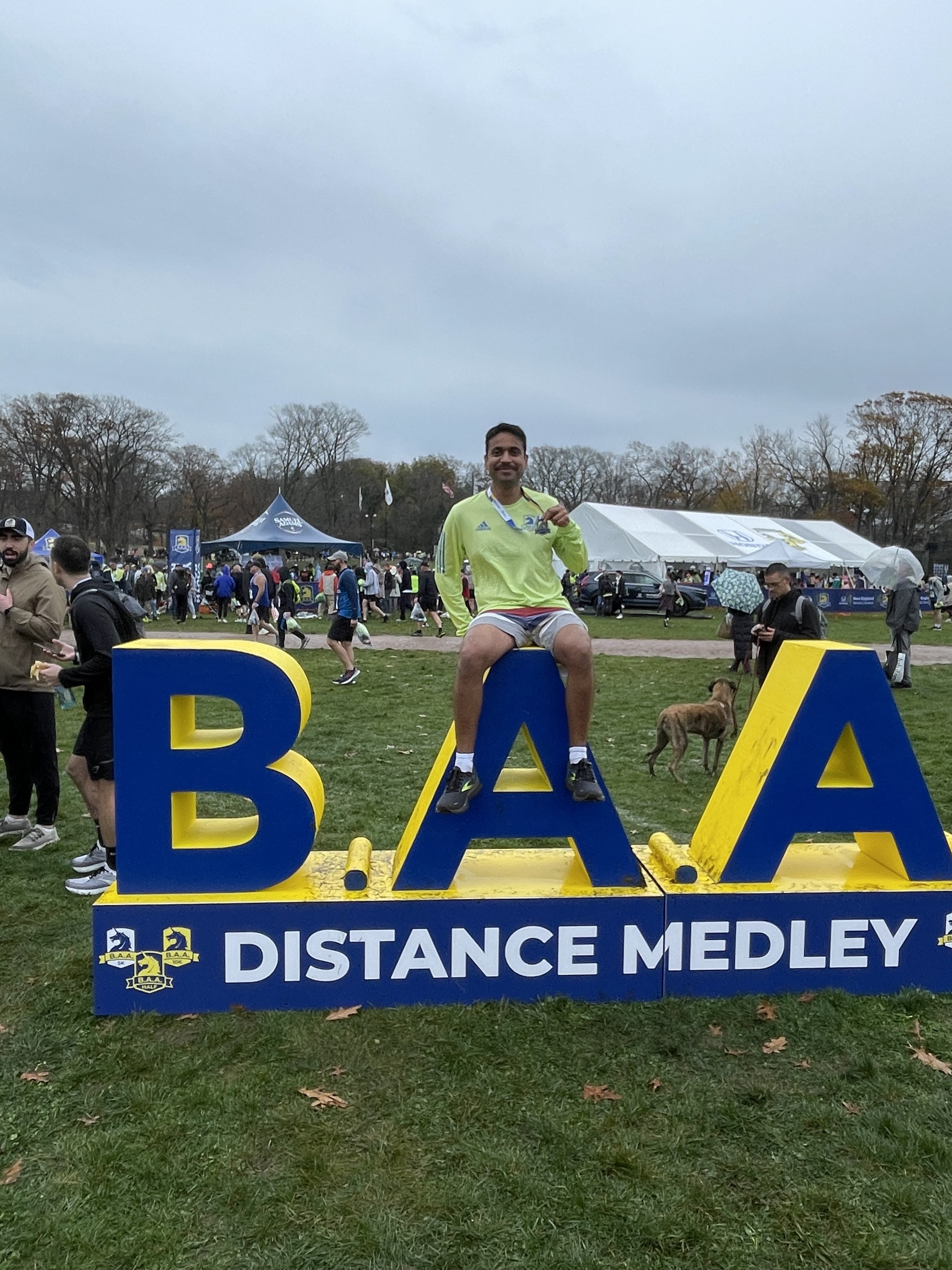
Outside Work
🏃 Boston Marathon finisher
🃏 Bridge enthusiast
🌶️ Ghost pepper survivor
Gaurav Mittal
“I build AI agents that work in messy, real-world environments, at scale.”
EXPERIENCE
Building AI agents for Fortune 500 clients
Scaled auto financing platform and LLM dealer copilot
Search and discovery for India’s largest food marketplace
Built a travel app for backpackers
The common thread: complex domains where AI has to earn trust before it can scale.
Glean for Teachers
Table of Contents
The Core Problem
01 THE CORE PROBLEM
By the time a teacher knows, it's too late.
Grading takes weeks. By then, students have moved on — with the wrong understanding baked in. Teachers don't know. Students don't know. The gap just grows.
Sources: NCES Teacher Survey, McKinsey K-12 research, National Education Association
Select a problem
WHAT THIS MEANS
By the time grades are in, students have moved on
Example:
A student breezes through homework but fails the exam. The teacher finds out three weeks later — after the next unit is halfway done.
By then, students have already moved on to the next unit — building on a foundation that was never solid.
Tap any tag for details
The problem isn't grading speed. It's signal latency.
The information to help every student already exists in the teacher's quizzes and assignments — it's just never been extracted, structured, and delivered before class starts.
Meet Sarah and Marcus
02 WHO THIS IS FOR
Behind every struggling student is a missed signal.
Sarah teaches Algebra 2 to 90 students across 3 classes. Here's what her week actually looks like.
Sarah's week today
Marcus is a 10th grader in Sarah's class. He got a 62 on the last quiz. He studied for 3 hours. He doesn't know why.
From Grading to Teaching
03 NORTH STAR
Less time chasing signals. More time actually helping students.
Glean gives teachers a clear picture of who is struggling and exactly what to do — powered by overnight analysis of student work. No extra grading. No guessing. Just signal.
Every tool before this made grading faster.
Glean makes the insight automatic — by reading the data that already flows through Canvas.
That's the difference between a faster workflow and a smarter classroom.
BEFORE
WITH GLEAN
Sarah grades for 12 hours. Finds out Marcus was lost 3 weeks later.
Marcus gets a score. Studies the wrong things all week.
Sarah opens a 90-second brief. Knows exactly who needs help and on what concept.
Marcus gets a private study hint that night — tied to Sarah's actual lesson, not generic internet advice.
INTERACTIVE PROTOTYPE
↗ Open in v0Click through to explore the teacher and student views
(Best experienced on desktop — or open directly in v0)
Why Glean?
04 WHY GLEAN
Most tools start from scratch. Glean already has the infrastructure.

Your curriculum. Not the internet.
The same RAG architecture that surfaces internal docs for a sales team can index a school's lesson plans and curriculum guides. Every suggestion is grounded in what the teacher actually teaches.

Student data stays private — by architecture.
Glean never stores what a student wrote — only what they misunderstood. FERPA compliance is an extension of enterprise infrastructure that already handles SOC 2, HIPAA, and role-based access.

The whole school learns, not just one classroom.
When one teacher finds an effective way to address a misconception, Glean surfaces that insight to every teacher in the district who hits the same gap. The longer it's used, the smarter the whole school gets.
Glean already connects to Salesforce, Slack, and Google Drive. A Canvas connector is the same pattern, new domain. This is an extension of what Glean already does — not a bet from scratch.
Building the MVP
05 THE PLAN
We're not building everything at once. Here's why.
The MVP proves one thing: if teachers get a reliable misconception signal from work students already submit in Canvas, will they act on it before the next class?
A week with Glean
IT ADMIN — One-time setup
Glean connects to the school's Canvas or Google Classroom instance via API — the same way it connects to Salesforce or Slack for enterprise clients. Once connected, every quiz and assignment submission flows into Glean automatically. The teacher does nothing new.
WHY THIS IS IN THE MVP
Zero new teacher behavior. Glean reads from systems the school already uses and trusts.
What's happening under the hood
Sync
Canvas / GClassroom API
Student submissions pulled automatically
Parse
Submission parser + LLM
Answers extracted, free-response reasoning analyzed
Ground
Glean Enterprise Search
Matched to teacher's curriculum
Deliver
Canvas / GClassroom
Brief in teacher's existing LMS
Example signal
Marcus selects the same wrong answer on 3 of 4 quadratic formula questions — each wrong answer corresponds to a sign inversion error in the distractor mapping → classified as "sign inversion in quadratic formula" with high confidence → matched to Sarah's Unit 4, Lesson 3 slides → surfaces in Monday's brief: "11 students inverting signs — reteach recommended, 10 min."
Every signal includes a confidence score. Teachers can override with one click — and that feedback retrains the classifier.
Each step runs overnight. The teacher's only action is what she already does — assign a quiz in Canvas. Glean does everything else.
NOT IN THIS MVP
Student-facing study hints and handwritten work analysis are deliberately out of scope. We start with digital submissions to prove teachers trust the signal — no new teacher behavior required. Deeper analysis of handwritten reasoning (via photo uploads or scanning) and student-facing tooling come in Phase 2, once the core loop is working.
WHAT GUIDES EVERY MVP DECISION
Get it right before scaling
Missing some signals is fine. A wrong signal damages trust permanently.
Protect student privacy first
We store what went wrong — never what was written. Privacy is built in, not bolted on.
Use your school's own materials
Every suggestion comes from the teacher's own curriculum — not the internet.
One thing done really well
Algebra 2 first, one robust loop first, then broader expansion.
The MVP Spec
06 MVP SPEC
The MVP, in detail.
EXPLORE THE SPEC
| Step | What happens | Tech | Why this choice |
|---|---|---|---|
| Connect | Glean syncs with Canvas or Google Classroom via API | LMS Connector (OAuth) | Same connector architecture Glean uses for Salesforce and Slack |
| Parse | Student responses extracted and structured from submissions | Submission parser + LLM | MC parsed directly; LLM analyzes free-response reasoning |
| Classify | Each answer mapped to a known misconception pattern and scored for confidence | Distractor analysis + fine-tuned classifier | Distractor mapping for MC; LLM for free-response |
| Retrieve | Gap matched to teacher's own curriculum materials | Glean Enterprise Search | Glean's enterprise search grounds suggestions in the teacher's own materials |
| Deliver | Summary pushed to teacher's LMS before next class | Canvas / Google Classroom | Canvas and Google Classroom are already open on the teacher's screen every morning |
Open Questions
07 OPEN QUESTIONS
What we'll learn as we build.
Four questions we don't yet have perfect answers to — and how we'll get them.
01
Will a teacher change Monday's lesson based on an AI signal?
If teachers read the brief but don't act on it, Glean is a nice-to-have — not a must-have.
HOW WE'LL ANSWER IT
Track lesson adjustment rate in weeks 2–4 of the pilot — under 30% means the signal presentation needs rethinking.
02
Where's the line between a useful flag and crying wolf?
One false flag that embarrasses a teacher in front of their class destroys trust permanently.
HOW WE'LL ANSWER IT
Launch with top 15% confidence signals only, then calibrate using teacher override patterns in weeks 4–8.
03
Will IT teams treat us as a read-only analytics layer — or lump us in with full LMS integrations?
The difference is 2 weeks vs. 6 months. How schools categorize Glean determines whether pilots start or stall.
HOW WE'LL ANSWER IT
Track approval cycle time across pilot districts. If we're getting routed to full security review, reposition as read-only analytics with no write access to student data.
04
If students care about grades and not understanding, will they engage with feedback that has no grade attached?
The student value prop collapses if the incentive system works against us.
HOW WE'LL ANSWER IT
Frame all student-facing features as 'no grade impact — just for you.' Measure return rate in Phase 2. If engagement is low, test whether linking insights to score improvement changes behaviour.
Before You Go
08 CLOSE
What I'd Do in Week One
The hardest part of this problem isn't the technology. It's earning a teacher's trust on a Monday morning with 30 restless students waiting. That single moment shaped every decision in this document.
In week one I'd be in a classroom. Not showing software — watching how a teacher uses Canvas after a quiz, what she looks at first, and what she wishes the data could tell her. The product has to fit that moment before it can change it.
That's what excites me about this role: the deployed PM is the feedback loop that the product itself is trying to create.
Week one starts with a classroom. Everything else follows.
WANT TO CONTINUE THE CONVERSATION?